

How Do You Like Your Eggs?
Seems like a pretty simple question…but maybe it’s not so easy.

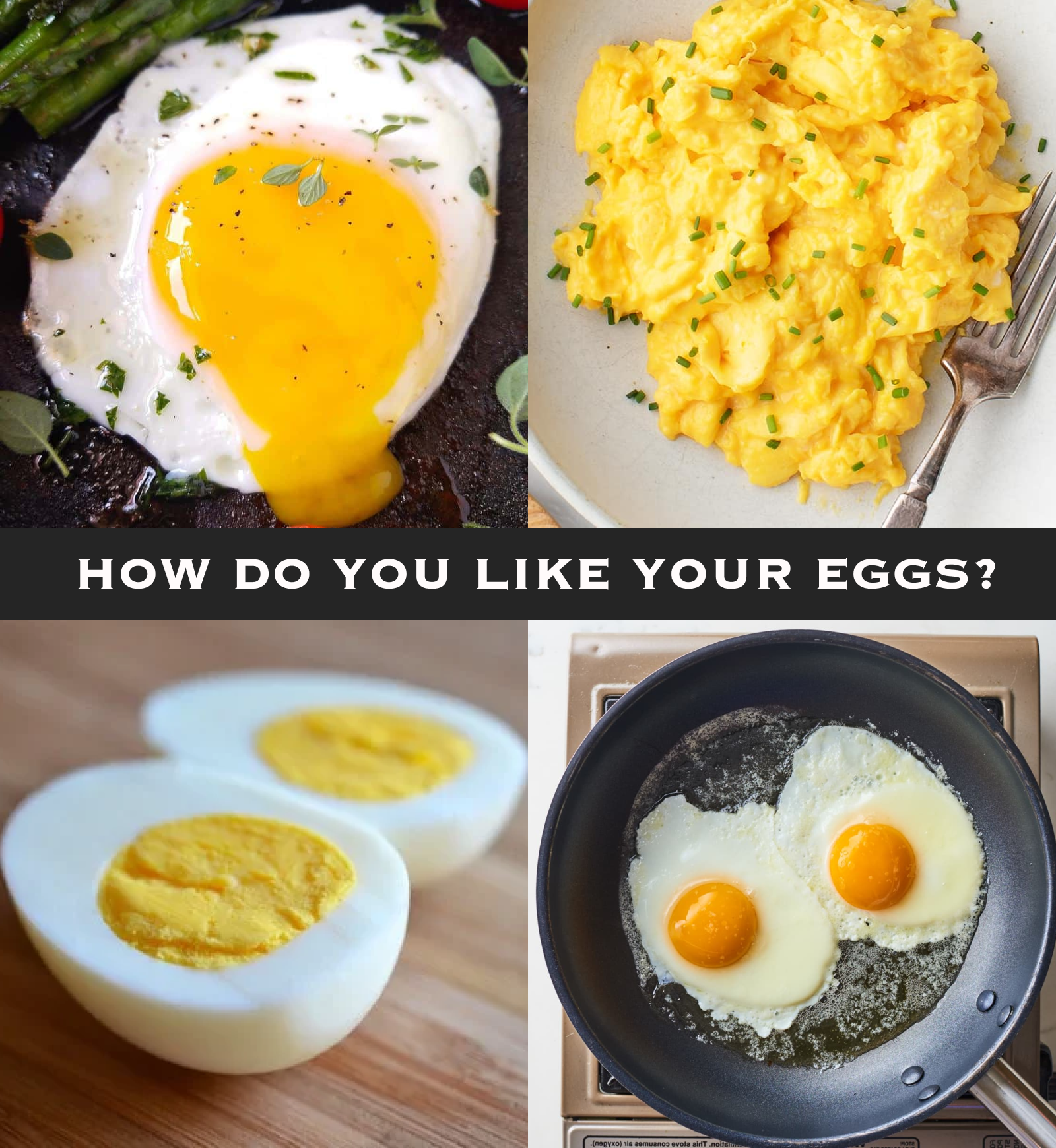
It’s amazing how many ways you can cook eggs to create unique eating experiences. On one hand, these experiences can be eagerly anticipated, while on the other hand, they can evoke feelings of disgust. I’m confident that a particular way of preparing two eggs for your breakfast plate immediately came to mind.
Here is a sampling of ways you can order eggs in an American diner:
Poached, hard boiled, soft boiled, sunny-side up, over-easy, over-medium, over-hard, scrambled, scrambled dry/hard, or shirred. None of those sound appealing? Maybe you want your eggs mixed up and cooked in a thin layer with filling stuffed inside? I give you the omelet. Read to the end for my controversial opinion on an egg form you definitely didn’t think of!
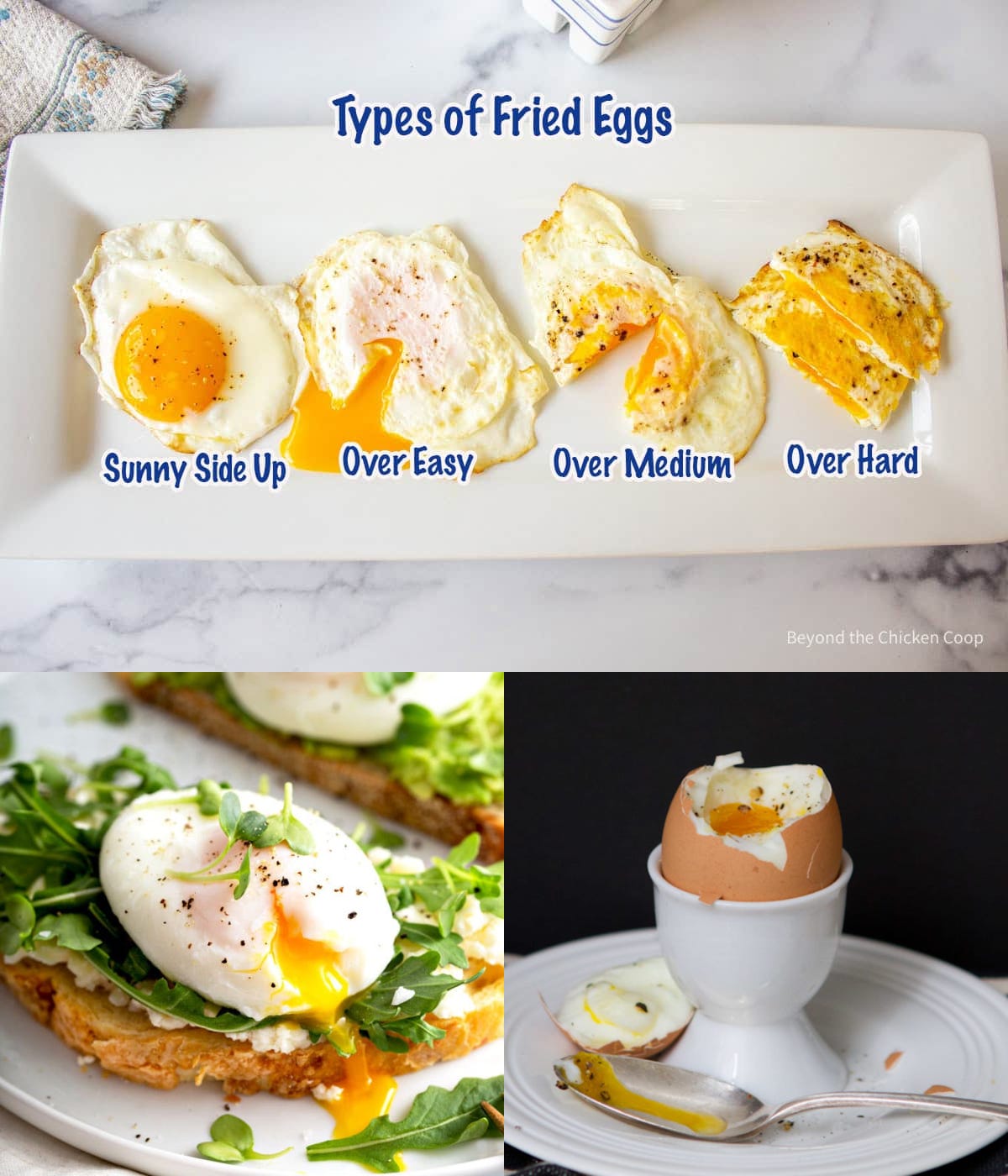
Want boiled eggs? Well, you might need to be specific on your time and location for eating them because you rarely see hard-boiled eggs on the menu unless it’s sliced on a salad. Even rarer, soft-boiled eggs are often only found in Europe incorporated in a continental breakfast spread.
To me, this is fascinating and a great example of what I call FOOD FORM. Our body doesn’t care how we like our eggs. It doesn’t matter if you ate pillowy-soft, wonderful scrambled eggs or some fried eggs cooked to death on the flat top with no seasoning. It’s all eggs. It’s all calories. But our mind and our senses…they care a whole lot.
Because the form of eggs DOES matter.
And FOOD FORM matters.
Changing the form of the food completely alters the experience of eating it. One bite and one plate at a time. After all, no one would argue that taking a bite of a hard-boiled egg is the same as biting into a runny, over-easy fried egg.
FOOD FORM changes for a number of reasons, but mainly for variety and preference. We have come a long way as people from hunting, gathering, and surviving on whatever we could find to sustain ourselves. In previous generations, we just ate what was around, with very minimal choice. But our expectations have changed and we hope certain foods are prepared in certain ways. Why? So we can all enjoy the best, tastiest meal in our view.
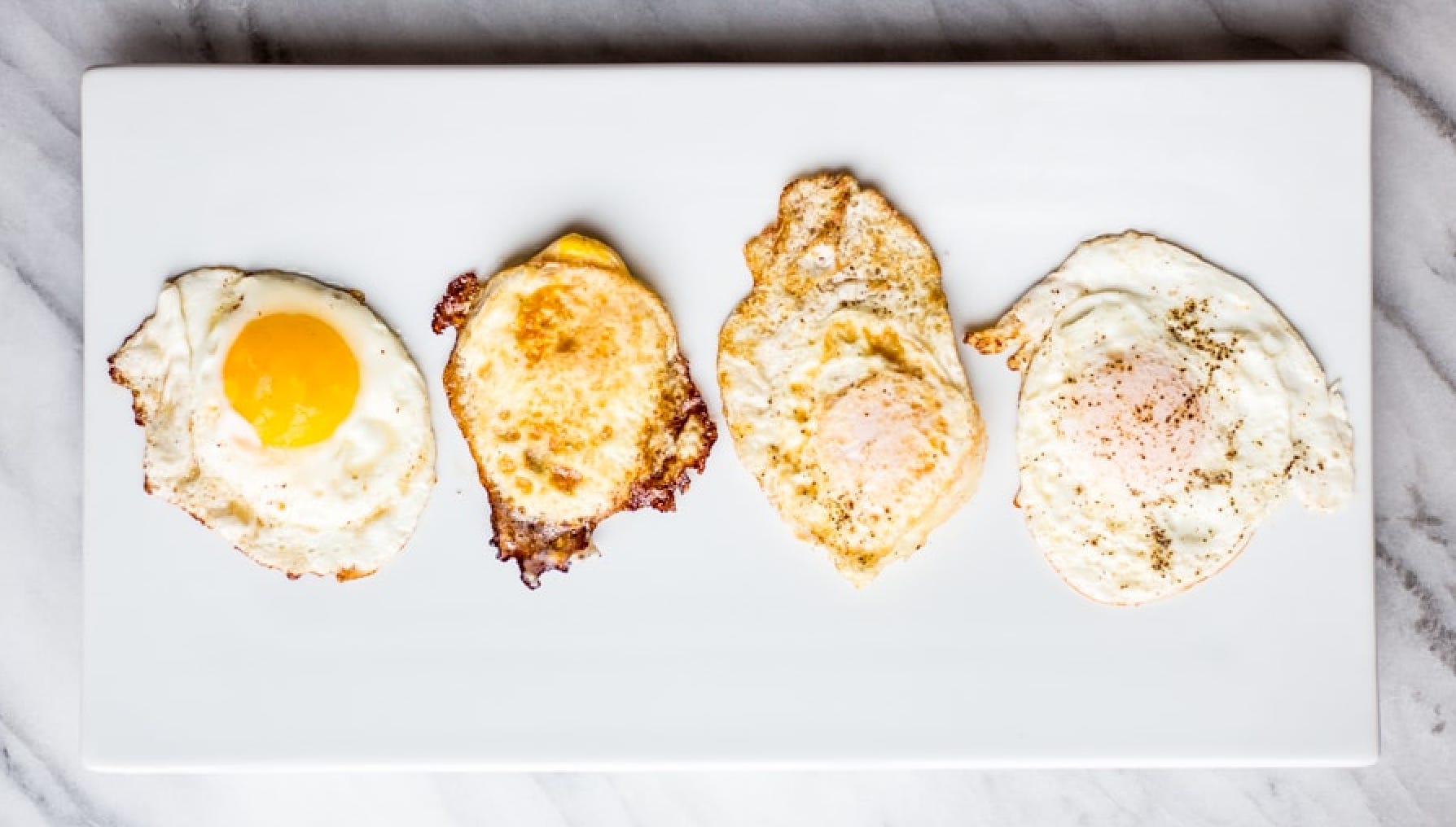
When I was a young chef, I spent one summer in Breckenridge, Colorado where I got some very good experience working the breakfast line. When I was cooking an order, if I accidentally broke a yolk, I had to throw the egg away. Never, ever would I serve a broken yolk -- unless the customer asked for it. Think about that for a second: we have come to expect an intact yolk next to our crispy bacon and if we ordered sunny-side up and received some sort of sunny broken yolk smear, we’d be disappointed, something would be terribly wrong and we would probably send it back. All because or egg form was not how we wanted it
But again, it shouldn’t matter. They’re just eggs!
And yet, apparently, it does.
Bake those eggs
While eggs on their own provide an array of forms that change the eating experience, with an extra ingredient or two and changing the way you cook them, you can unlock a whole other category of egg forms. For example, if you take those eggs that you whisked for scrambled eggs but instead of cooking them on the stove, you throw them in the oven, you can make a quiche, a frittata, a strata or a baked egg dish. These options rarely show up at a diner but are more often seen at a café, coffee shop, or at home for brunch.


You’ve heard of these things, but do you know the difference? They’re hilariously similar and yet all so different. They all contain whisked eggs and your choice of veggies/proteins and most similarly, they’re all baked. Here’s a breakdown:
Frittata: Broken yolk eggs + cheese/vegetables/meats/seasonings. All mixed. Baked in a pan until firm.
Quiche: Broken yolk eggs + cheese/vegetables/meats/seasonings. All mixed. One layer of uncooked pie dough on the bottom of the pan. Baked in a pan until eggs are firm and dough is golden brown.
Strata: Broken yolk eggs mixed + cheese/vegetables/meats/seasonings. Can be layered in preparation instead of mixed. Often, bread slices or cubes are added. Baked in a pan until firm.
All of the above are baked eggs.
And all of the above are technically a breakfast casserole.
But they aren’t the same. They do not provide the same eating experience.
Frittata = crustless quiche
Quiche = frittata with crust
Strata = baked eggs with bread form (not crust)
Frittata & Quiche = baked eggs
None of these is a breakfast pot pie…that would need crust (not bread) on top of a quiche. (Your breakfast mind might be scrambling now!)
The Omelet
As I’m sure you’ve heard before, there’s more than one way to make an omelet.


French style: Low heat. Cooked in a sauté pan. Consistent stirring to create small curds. Cheese/vegetables/meats/seasonings added, but in moderation. PICSoft, creamy texture. Folded half-moon or cigar roll presentation.
Home-style: Medium heat. Cooked in a sauté pan. Moderate stirring to create medium sized curds. Cheese/vegetables/meats/seasonings added. Folded half-moon presentation.
Diner style: Medium heat. Cooked on a flat top griddle. Thin layer of broken yolk eggs. Cheese/vegetables/meats/seasonings added. Sometimes many. Folded with a spatula. Rectangle shape presentation.
The Food Form of eggs changes with each preparation technique. Are the yolks mixed or intact? What temperature are you cooking at? What are you cooking the eggs in?
We boil and/or simmer them, which could be in or out of their shell. We bake them with radiant heat in an oven. We fry or sauté them in a pan. And any small change in the time, temperature, or tool you’re using to cook the eggs changes the end result. Amazingly, this difference is only a few seconds or only a few degrees. Think about an over-easy egg vs an over-hard egg; just a few seconds completely changes what you serve. Or consider scrambled eggs. If you pour your whisked eggs into a pan but instead of stirring the eggs, you just let them sit in the pan for a minute, the eggs will start to firm up and you can make an omelet!
The variety of Food Form also changes up the dozen eggs you have in your fridge. I’m sure this scenario has crossed your lips… “Aww man, I’ve had fried eggs for three breakfasts in a row. I’m getting bored with eggs. But man, an omelet sounds good!” It’s still 2-3 eggs cooked in a pan. Often cooked in the same type of pan over the same heat! But the result is a completely different eating experience and keeps us interested and excited about eggs.
Hidden Eggs?
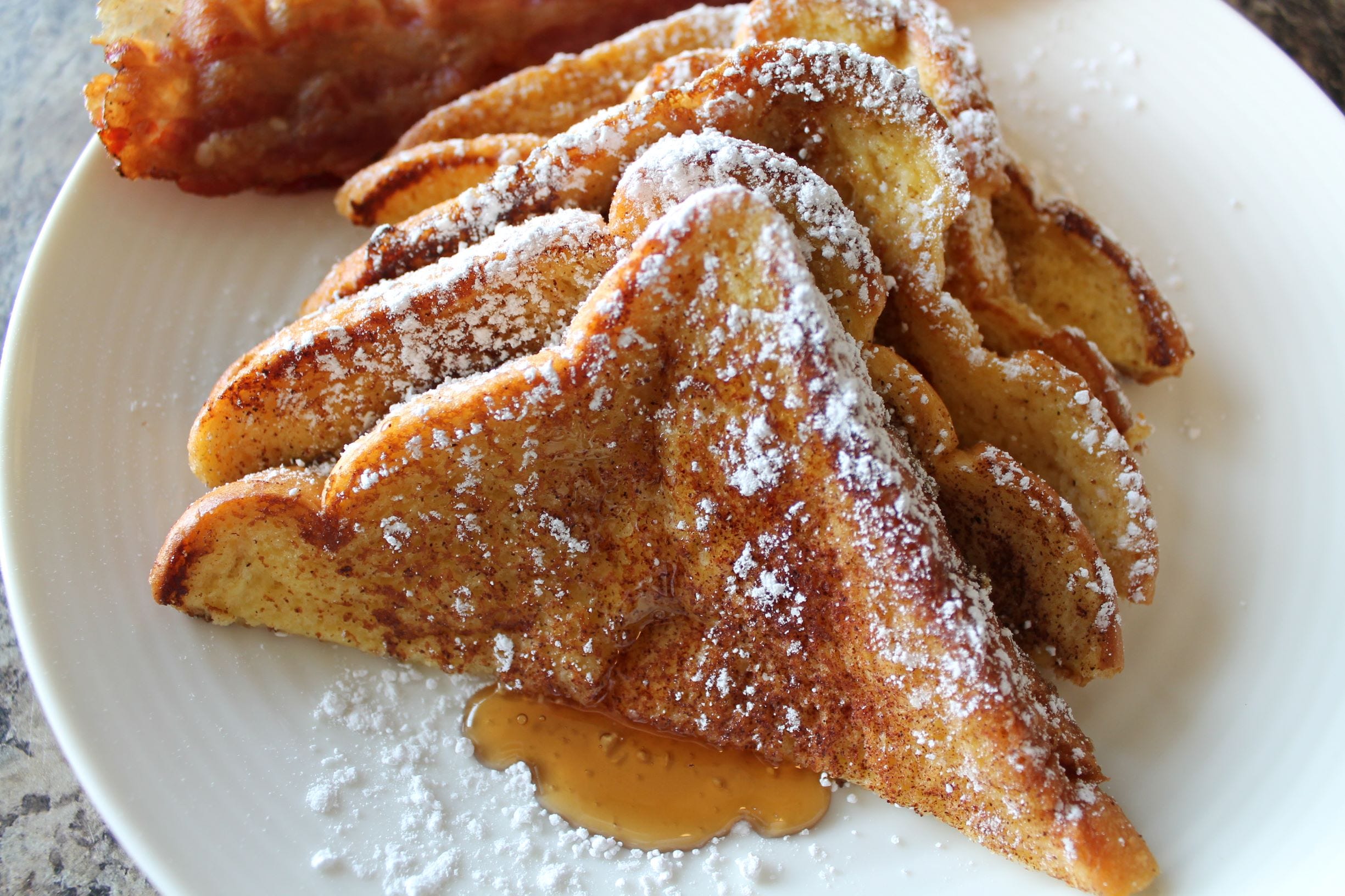
One final way that we could enjoy eggs at a breakfast diner is a little sneaky. It’s not quite in your face, but the eggs are there. French toast is a classic weekend breakfast option. And what is French toast? Broken yolk eggs, mixed with milk, sugar and seasonings. Then, usually slightly stale bread is dunked, submerged and soaked with the egg mixture. Then we cook it over medium heat in a pan or on a griddle. Dash of powdered sugar, and you’ve got scrambled eggs in a whole new way!
So, how do you like your eggs?
Or perhaps another way to think of it is …how do you NOT like your eggs?
How Does Chef Corso Like His Eggs?
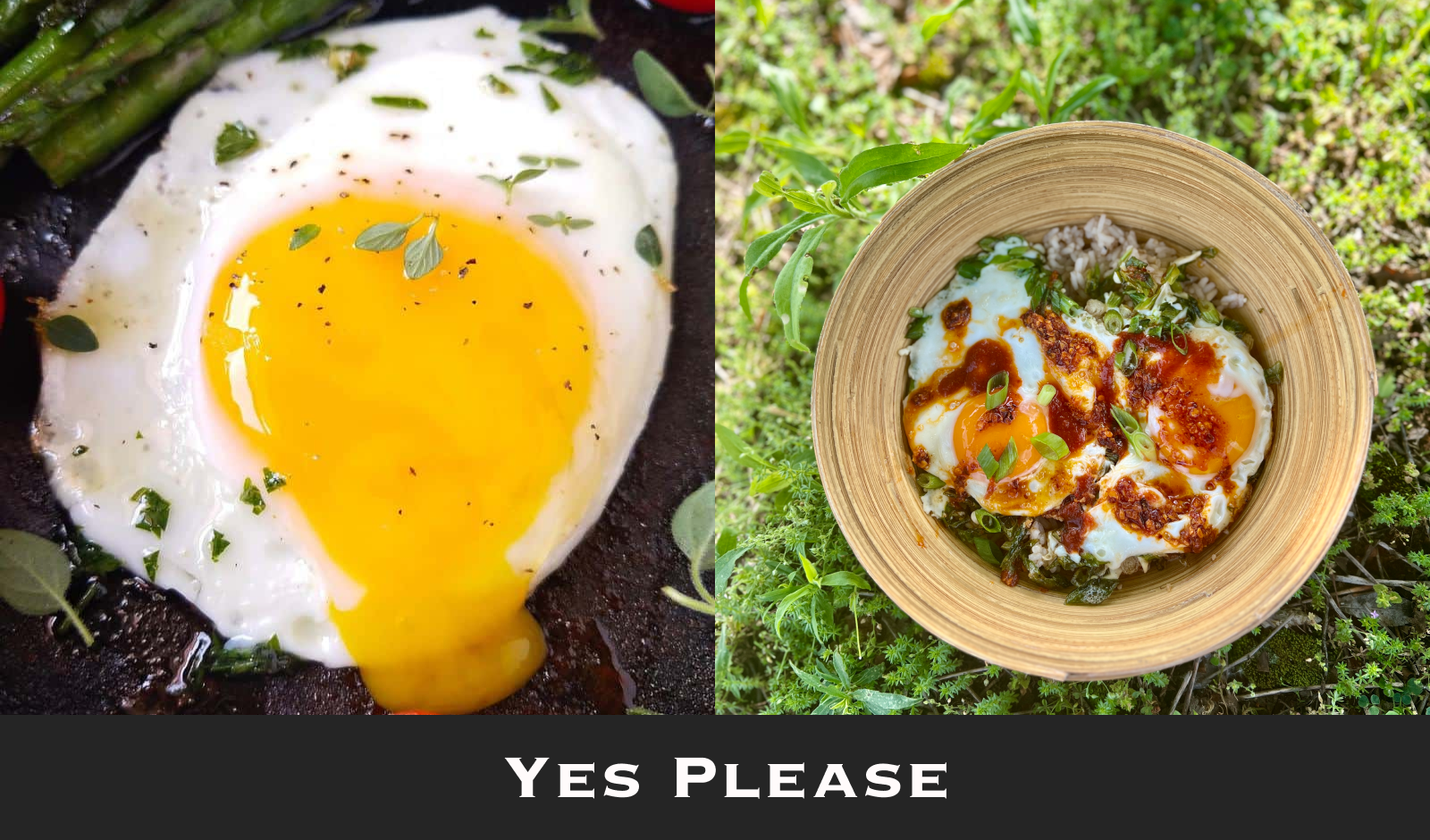
I like eggs in a lot of ways, but my usual standards are fried over-medium: a little crispy around the edges. I like my toast having some yolk to dunk/swipe with but not have it running ALL OVER the plate like a canary-colored stream.
I also like poached medium. Usually, this is on a bowl of steamed or fried rice with some nice veggie and saucy garnishes. (yes, you can eat eggs away from breakfast time)
How Does Chef Corso NOT Like His Eggs?
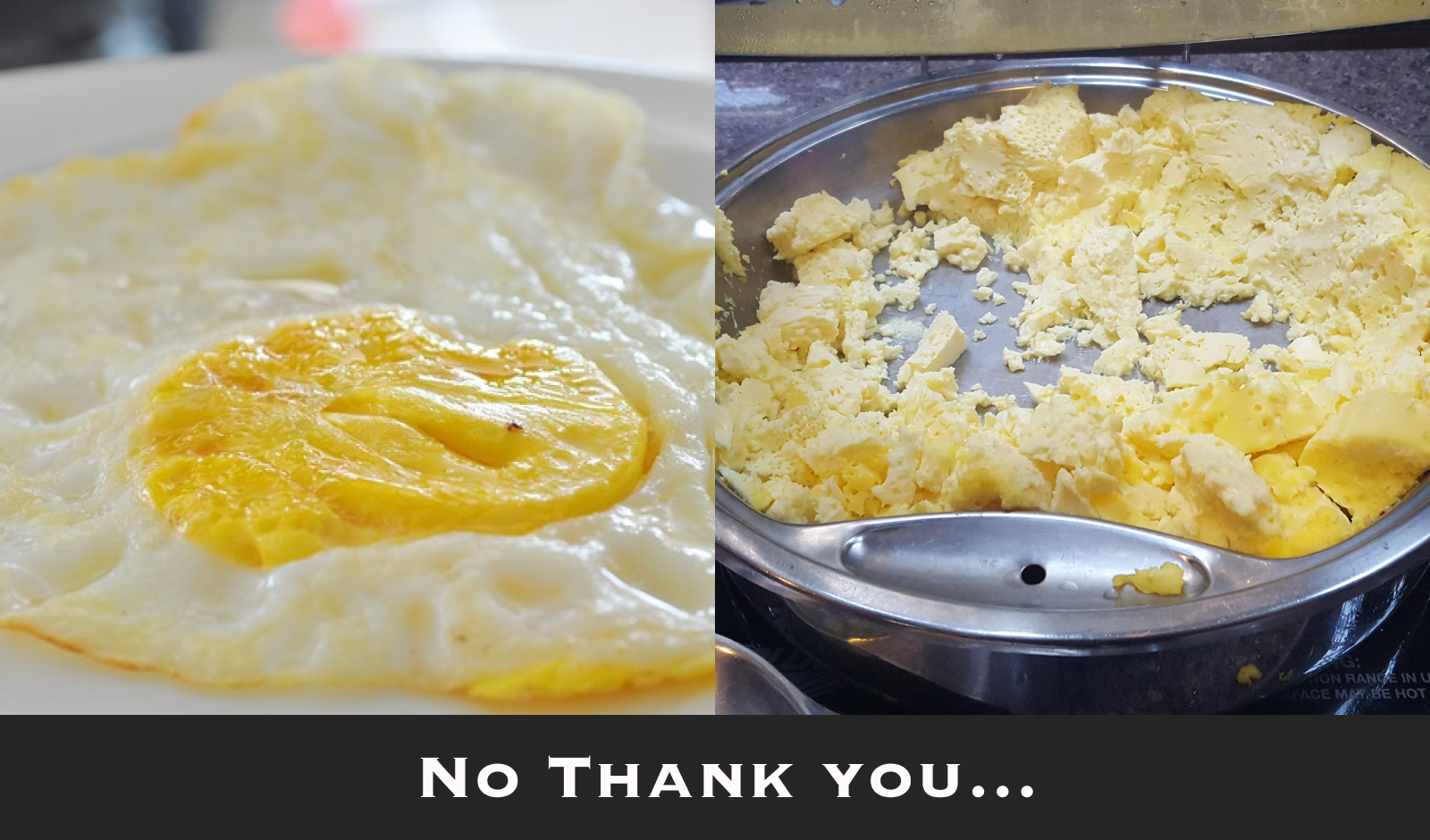
I definitely don’t want a fried over-hard egg with a broken yolk, room temp or lukewarm.
I also really dislike scrambled dry, no seasoning. Most often served at a free hotel breakfast or breakfast buffet. No thank you.
Get out there and eat some eggs!
-Cheers
Like:it's a coin toss between western omleted with lots of cheese. Or pickled
Dislike: powdered…any style.